Lick the Cat: A Glance at Oral Culture from Blues to Rap |
| Back
to the Books and Other Writing page Back to the Archive Contents page by Elijah Wald (Earlier versions of this piece were delivered as a paper at the 2015 Experience Music Project Conference and published in Pitchfork magazine.) History is a tricky business, and the history of sex is particularly tricky. People lie not only about what they do, but also about what they don’t do, and even the lies are rarely preserved for us to look back on. And then there’s the problem of censorship: most people talked about sex using words that were considered “unprintable”—or, once audio recording was invented, unrecordable. Fortunately, a few artists and styles pushed the boundaries, and in the early twentieth century, African American blues singers led that push. Blues was considered low-down, honky-tonk music, performed for audiences of gamblers, prostitutes, and laborers. Most lyrics were still censored in print or on record, but a handful of examples have survived to suggest what was lost. He added in a footnote that he was avoiding the technical term cunnilingus, because it was used to “refer to pathological practices,” while “I treat of manifestations which are, in their present context, absolutely unobjectionable and legitimate.” Legitimate as such manifestations might be, both Morton and Van de Velde presented them from a strictly male point of view, as lubricating foreplay before the main event—indeed, Van de Velde argued that pursuing oral sex to the point of orgasm was pathological. Tellingly, the only other early version I have found of Morton’s verse shifted the theme away from oral sex: a lyric in the Library of Congress, apparently collected in the 1910s, starts the same way, but finishes: “I’ll Vaseline your coozie till my cock gets hard.” That variant was apparently collected from white sources, which is particularly relevant because by the later twentieth century there was a widespread stereotype in black culture that eating pussy is a white thing—when I was in high school, it was something black guys teased white guys about. And that brings us to another disconnect between Afro- and Euro-American societies. In white culture the word “cock” is used for penis, and “cocksucker” is typically glossed as a homophobic slur, but in black culture, especially in the South, that word was consistently used to mean vulva—it still turns up with that meaning in southern rap lyrics—and the African American sociolinguist Geneva Smitherman defines the insulting compound in her dictionary of black slang as: “A man who is weak, passive, emasculated. Derived from the notion that a man who performs oral sex on a woman is a weakling.” She adds: “the myth is that African American men don’t go down on women.” Given that myth, it is interesting that there are so many lyrics in black culture about men doing exactly that, and virtually none in white culture. One reason may be the audience: in white culture, “dirty” songs and verses have typically circulated in all-male environments, as adolescent naughtiness, but blues was always sung for a largely female audience—albeit at times a female audience of sex workers in red light districts catering to semi-adolescent white males. One could argue that since “cocksucker” is an insult, African Americans clearly disapproved of the act, but that argument is complicated: one of the ways historians demonstrate the existence of illicit acts is prohibitions against them—there usually isn’t a lot of energy expended on attacking a behavior unless a lot of people are doing it. In any case, Smitherman’s gloss fits one of the ongoing themes in many of the lyrics, which is that men don’t like to do it. There are a couple of other themes that surface alongside that, though—one of them being that that women do like it, and that men had better be aware of the fact. Robert McKinney, the one Black folklorist in the main office of the New Orleans WPA Federal Writer’s Project during the Depression, preserved a verse from that details a man’s doubts and then his final decision to go for it: Guess what mah gal tol me de other night in bed? This verse includes a good example of censored history. When I first came across it, I assumed the name “John Rucker” was just made up to rhyme with “sucker”—but in the recent history Beale Street Dynasty, Preston Lauterbach writes about a widely publicized court case in Memphis in 1868, in which a white woman was put on trial for shooting a black woman over their shared black lover, who visited when her husband was at work, and his name was Jim Rucker. It’s not a long way from Jim to John, and I’m guessing there were lots of songs and rhymes about that case—none of which would have been collected or transcribed because they all would have used obvious rhymes for “Rucker.” But some versions apparently survived as folklore and seventy years later a woman could still scare a man just by mentioning that she “knew black John Rucker.” Another toast on the same theme was collected thirty years later in Texas from someone named Bitty Brown: She said, "Ah hell, I can find a grinder any time, that can grind for a while Those verses are again from a male viewpoint, suggesting cunnilingus is something a man might not want to do, but you have to do it to keep a woman satisfied. The verses collected from women often make that point as well, but with the notable difference that many of them add instructional tips. For example, McKinney’s collection includes this verse from a female informant: Love is sweet as butter There is another good example of hidden history in that verse: there are virtually no English-language slang or colloquial terms for the clitoris—as opposed to German, or numerous African languages, which have familiar words for that organ—but three lyrics in the Tallant collection use the term “purry tongue,” suggesting it was common in black New Orleans. It’s a cute euphemism—a pussy has a purry tongue—and in other regions it was similarly known as “purr tongue.” Ray Charles recalled, “, back on my old stompin’ grounds [in Florida], I could usually find some purr tongue. (That's the word us country boys used for clitoris.)” And the Black journalist Frank Marshall Davis wrote, “I suppose some of the fellows I grew up with have never yet heard of a clitoris, but at an early age we talked about a “purr-tongue” or a “boy-in-the-boat.” The latter phrase was celebrated in a popular song, usually recorded as an instrumental and often titled “Squeeze Me,” but recorded by the singer George Hannah in 1930, with the further description, “Face is all wrinkled and his breath smells like soap/ Talking ‘bout that boy in the boat.” That kind of lyric was not intended as naughty comedy—it was the straightforward language of working people before mass media introduced new standards of middle-class propriety. However, it became increasingly submerged as the “Race record” industry spread thousands of blues lyrics that cloaked their sexy themes in winking euphemisms. In 1928 a singer and guitarist named Tampa Red became one of the biggest stars on that market with a hit called “It’s Tight Like That”—which carefully avoided specifying the “it” in question—and he followed up in 1929 with “What Is It That Tastes Like Gravy,” a sample verse relating: The gal that let me taste it, they put her in jail Unlike the “smells like soap” and “tastes like limburger cheese” lyrics, Red’s verse suggested he enjoyed the flavor, and in 1939 Wheatstraw followed up his earlier song with the celebratory “I Want Some Seafood”: I want some seafood mama, and I don’t mean no turnip greens Censorship could only reach so far, and some people undoubtedly kept trading dirty barroom rhymes, but the next wave of songs about real-life sexual practices wouldn’t sweep in until the 1970s. Ike and Tina Turner provided a foretaste when they hit in 1968 with “I’ve Been Loving You Too Long,” including a long interlude about oral sex in their live performances. This interlude is mainly remembered because Ike, in one of his most famously abusive acts, forced Tina to mime fellatio with the microphone, but what virtually no one seems to remember—perhaps because it is harder to fit into the story of their profoundly unequal relationship—is that in the middle of this sequence, Ike remarks, “Now, look-a-hear, baby, I ain’t never tried anything like this here before, but I’ll try anything one time,” and makes his own slurping love to the mike, to which Tina responds with a moan, then a broad smile as she tells him, “Try it one more time,” and begins to fake an orgasm. The soul revolution happened in the same period as the sexual revolution and the feminist revolution, and although those movements were not always in sync, new conversations were happening in some surprising venues. A lot of people found those conversations embarrassing, for a variety of reasons: when a singer and comedian named Blow Fly cut a dirty parody of Otis Redding’s “Fa Fa Fa Fa Fa (Sad Song)” as “The Eating Song (Yum-Yum),” with lines like “She’s got the only cunt that’s sweet enough to eat, good tasting cunt, y’all,” most people would have found it offensive for the language he was using, but he had another concern, interrupting himself to remind “the ladies” in the audience that he was just kidding: “I don’t go in the bushes, speaking for myself—I don’t know about the rest of the fellahs. Not yet.” That was in 1973, and the “not yet” was a nervous male response to changing mores. Four years later, Marvin Gaye testified to his recognition of those changes on “Soon I'll Be Loving You Again,” singing to his young lover, “I never did that before, but there’s always a first time,” while in falsetto his background vocal specified: “I never gave up no head”—and by the end of the song he was ecstatically repeating the promise: “I’m gonna give you some head.” Like the early African American blues scene—and unlike the later, white-fan-based blues scene, which tends to consist of white guys applauding guitar virtuosos—the soul scene was aimed largely at an audience of black women. In the 1980s, as dance-oriented music took command of the national R&B market, that soul scene went south and was rebranded as “down home blues,” “soul blues,” or simply blues. The stars were mostly older, second-tier soul singers, including Millie Jackson, Denise LaSalle, Clarence Carter, and Latimore (the composer of Jackson’s “All the Way Lover”). At a typical southern blues show, virtually everyone in the audience is African American, and it’s about 80 percent women, mostly in their forties, fifties, or sixties. The soul-blues scene thrives on racy songs, but they are racy songs for older women—and in 1987 a 41-year-old ex-gospel singer named Marvin Sease took the scene by storm with a ten-minute track called You know what, honey? Your man ain’t going down on you, girl. No—because your man got too much pride. You know, it’s funny—I used to be like that too, girl. But one day my lady told me, “Marvin, you better get your shit together, man.” And girl, I started going down. “Candy Licker” was more than just a one-off hit; it defined Sease’s later career. His album titles included Do You Need a Licker?, A Woman Would Rather Be Licked, and, most simply: Breakfast. I saw him perform on a multi-act blues bill at the Gibson Amphitheater in Los Angeles, and his set was almost entirely devoted to testimony about the glories of giving head, punctuated with exhortations to the overwhelmingly female audience to demand that their men do likewise. The other male singers on the bill stuck to more macho fare, but Denise LaSalle, the one female performer, made her views clear: “I don’t like none of these men,” she said. “Except Marvin.... Marvin’s OK with me.” LaSalle herself took on the subject in 2000, getting one of her biggest late-career hits with a high-powered admonishment to men that they should “treat your lady like a stamp and a letter,” which set up the title line: “Lick it Before You Stick It.” A few southern blues artists bucked the trend—a singer named Roy C countered with “I'm Not Going to Eat a Thing (Unless You Put It in the Frying Pan)”—but most recognized that their audience wanted positive reinforcement and got with the program. Chuck Roberson aimed for the Sease audience with “Lollipop Man (Licking On Your Love Is My Game),” Lee Shot Williams cutting the charmingly-titled “I’m a Nibble Man,” and the old-time soul man Jerry “Swamp Dogg” Williams issuing the macho threat, “If I Ever Kiss It, He Can Kiss It Goodbye.” Meanwhile, on the distaff side, Big Cynthia (daughter of the Motown star Junior Walker) hit with “Eating Ain’t Cheating,” as well as “Don’t Rock the Boat (Just the Little Man in It)” and an artist called Ms Jody came up with a variation specifically addressed to older men: “Lick If You Can’t Stick,” reassuring them: “Don’t you feel embarrassed if you fall down on the job/ Cause you can still give me a thrill without that lightning rod.” Rappers, performing for an audience largely comprised of adolescent males, were more wary. In 1990, Tribe Called Quest’s second single, “Bonita Applebum” had Q-Tip rapping “I’d like to kiss you where some brothers won’t”—old stereotypes die hard—but when HWA (Hos with Attitude) tried to make a stronger statement the same year with the assertive “Eat It” (sample lyric: “I’m gonna take your head, lead you there/ Let your tongue part the hair”), it went nowhere. By contrast, in 1993 the female trio SWV got a Top 40 R&B hit singing a warm retro-soul ballad about the pleasure of a man finally taking “the road to ecstasy” and going “Downtown…to taste the sweetness.” The language was careful, but it proved there was a young R&B audience ready to hear the message, and in 1996 Lil Kim took an unambiguous stand on her first album with “Not Tonight.” Though most of her material seemed to be aimed at an audience of sexually clueless but eager male teenagers, this song was a brief attempt to school them: As she explained, her favorite man would “Lay me on my back, bustin’ nuts all in me,” but after ten sessions she had only come twice and getting sick of the imbalance: “I never was pushy [but] the motherfucker never ate my pussy.” Hence the straight-talking chorus: “I don’t want dick tonight/ Eat my pussy right.” And the conclusion: The moral of the story is this: Kim would return to that theme on later tracks like 2000’s “Queen Bitch, Part II,” where she rapped, “I’ma tell you now, just like I told you last year/ Niggas ain’t stickin’ unless they lick the kitten.” It became a major national hit, and in 2007 Lil Wayne became the first male rapper to go the Marvin Sease route and make cunnilingus a trademark, hitting with “Pussy Monster,” following up with “Lollipop,” and acting out the act with female volunteers from the audience. The former song even revived a variant of the old “purr-tongue,” blending the feline reference with a precious jewel: Cat fish, cat fish, that cat tuna… Some stories never seem to change: from the earliest blues to the latest rap, women keep trying to get the message across, and men keep picking up on it like it’s news and acting like heroes if they pay attention. In real terms, the numbers seem to be going up—a recent survey suggests that almost 90 percent of American women in their twenties have received oral sex from a man at some point in their lives, as compared to fewer than 50 percent of women over seventy. The numbers were roughly the same for black women, and though the proportions of black men who said they’d given head to a woman were slightly lower than the overall average, that may be less a matter of what people do than of what they tell researchers. As the New Orleans rapper MC E (Eglah Payton), explained in the opening of her 1993 recording: “They all out here frontin’ like they don’t do it, but we all know that they…” a dramatic tongue-slurp follows, leading into the repeated chorus: “Lick the Cat! Lick the Cat! Lick the Cat!”
By Elijah Wald © 2026 |
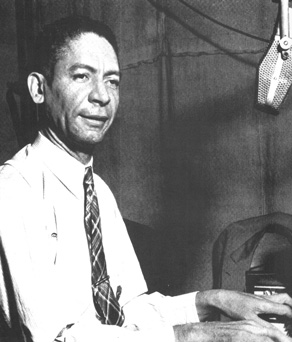 For example, Jelly Roll Morton recorded a long, uncensored session for the Library of Congress in 1938, in which he demonstrated the sort of material he performed in New Orleans whorehouses shortly after the turn of the century. One of those verses, in his theme song, “Winin’ Boy,” went like this:
 The rat and cheese reference turned up in multiple toasts, and occasionally in songs. Peetie Wheatstraw recorded a song in 1936 called “The First Shall Be Last,” which included the couplet, “The first woman I had made me get down on my knees/ And she had the nerve to ask me did I like limburger cheese.”
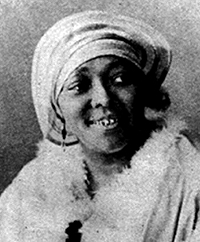 Very little uncensored material survives from the early twentieth century, still less from African Americans, and less again from African American women. There is only one surviving recording of a black woman explicitly singing about oral sex in this period, Lucille Bogan’s “Till the Cows Come Home”—which was recorded in 1933, but only released in 2004—and she introduces the discourse of quid pro quo, singing, “If you suck my pussy, baby, I’ll suck your dick.”
  A canny promoter, Wheatstraw was trying to catch some of the popularity of one of that year's biggest hits. “Hold Tight! I Want Some Seafood, Mama” was first recorded by the clarinetist Sidney Bechet and quickly covered by Fats Waller and the Andrews Sisters. The lyrics referred to a yen for shrimp and oysters, and the Fishery Council of New York and the Mid-Atlantic States briefly adopted it as an advertising theme, but the real meaning was signaled by the line “when I come home late at night, I get my favorite dish: fish!” Though the Andrews Sisters professed their innocence, NBC banned the song from airplay and when Eudora Welty wrote a short story in which a jazz musician sang it, the editors of Atlantic magazine made her substitute an alternate title.
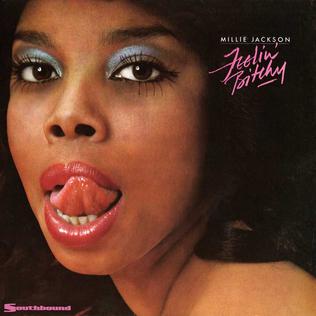 The lushly layered disco instrumentation made it easy to miss the details of Gaye’s lyric, but in 1977 Millie Jackson opened her Feelin’ Bitchy album with a ten-minute track called “All the Way Lover” that made her point clear with a spoken interlude: between soaring demands for an “all the way lover,” she instructed female listeners to demand that their men “get on down and partée”—a word of her own coinage and spelling, which she explained meant “no kissee on the belly button and stopping, now.” She extended this commentary on a 1979 live album, adding the familiar racial dig: “It’s about time you black guys caught up…it’s about time y’all came on in and gave us black women what these white girls been getting!” She was working the subject for edgy comedy, but the wild applause from female listeners soon prompted her to get more serious: in 1983 she recorded a straight-up sexy soul ode to oral satisfaction: “Slow Tongue.”
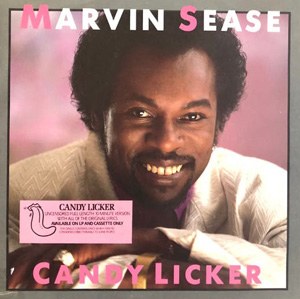 “Candy Licker.” Over a mellow electric guitar groove, Sease started out with a soaring confession: “I’m not ashamed no more,” he sang. “I want to do the thing that your lover never did before.” Over a backing track punctuated with female sighs and moans, he pled: “Let me lick you up, let me lick you down/Turn around, baby, let me lick you all around.” Then, going back to his church roots, he broke from the song to deliver a spoken testimony:
 The breakaway rap on that theme came a year or so later, when a Florida-based rapper named Khia released, “My Neck, My Back (Lick It),” with the repeated chorus: “My neck, my Back/ Lick my pussy and my crack.”